Last Updated: October 23, 2026
Quick Summary
Authentic Victorian door hardware is available from specialist heritage retailers, online retailers with detailed specifications, architectural salvage yards, and antique dealers. Trustworthy suppliers clearly distinguish between genuine antiques and quality reproductions, provide detailed descriptions with photographs, and offer transparent information about authenticity, condition, and provenance.
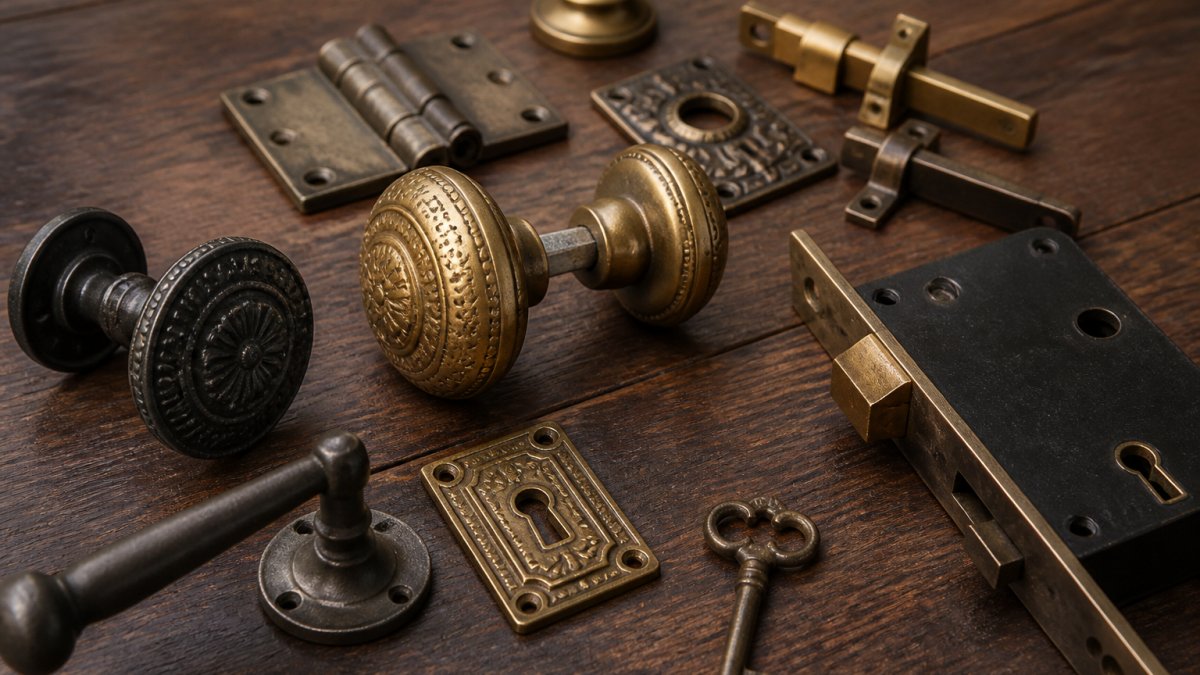
- Authentic Victorian door knobs show casting marks, hand-finished surfaces, foundry stamps, and uneven patina with wear in high-contact areas.
- Quality reproduction hardware uses traditional casting methods and is honestly labeled as reproduction, suiting projects needing multiple matching pieces.
- Victorian doors are typically 45mm to 50mm thick versus 35mm for modern doors, affecting spindle length and backplate compatibility.
- Different periods used distinct hardware: Colonial featured simpler cast iron and wrought iron, Victorian emphasized ornate brass, Federation blended Victorian with Art Nouveau, and Edwardian favored refined elegance.
- Verify condition before purchase by requesting close-up photographs, checking for cracks in cast iron, assessing rust depth, and confirming return policies and authenticity guarantees.
Table of Contents
- Where to Buy Authentic Victorian Door Hardware
- How to Verify Authenticity: Victorian Door Knobs and Beyond
- Antique Door Handles: Materials, Finishes, and Period Styles
- Reproduction Victorian Door Hardware: Quality and Value
- Heritage Door Hardware: Compatibility and Installation
- Buying Antique Hardware Safely: What to Check Before Purchase
- Period Styles: Colonial, Federation, and Edwardian Door Furniture
- Getting Expert Advice for Complex Restoration Projects
- Frequently Asked Questions
Where to Buy Authentic Victorian Door Hardware
The door hardware you choose makes or breaks a heritage restoration. At Restoration Station, we've spent over 35 years helping homeowners and heritage builders source genuine period-appropriate fixtures. The challenge isn't finding something that looks Victorian, it's finding hardware that actually is authentic, or knowing which reproduction pieces deliver real quality.
This guide covers identifying trustworthy suppliers, verifying authenticity, understanding materials and finishes, and assessing condition before you buy.
What Makes a Supplier Trustworthy
Suppliers with genuine expertise typically offer expert advice as part of their service. At Restoration Station, our team helps you match hardware to your home's actual period and construction.
Return policies and guarantees signal confidence. A supplier willing to accept returns if hardware doesn't fit, arrives damaged, or doesn't meet expectations is putting their reputation behind the product. Ask upfront.
Types of Retailers and Their Strengths
Specialist heritage hardware retailers focus exclusively on period-appropriate fixtures, stock deeper ranges of authentic and reproduction pieces, and employ staff trained in period identification.
Online retailers offer convenience and wider reach.
Architectural salvage yards and reclamation specialists source genuine antique hardware from period buildings.
Antique dealers and markets occasionally stock door hardware, though expertise in period authenticity varies. Quality control is inconsistent, and you need sharp eyes to spot reproductions masquerading as originals.
How to Verify Authenticity: Victorian Door Knobs and Beyond
Authentic Victorian door knobs and handles show manufacturing characteristics that even good reproductions struggle to replicate. Spotting these differences protects you from overpaying for modern copies or installing reproduction hardware in a heritage-listed property where authenticity matters legally.
Spotting Genuine Antique Features
Original Victorian door knobs cast in brass or cast iron show casting marks, slight variations in thickness, and hand-finished surfaces, and feel substantial where reproductions often feel hollow.
Genuine Victorian hardware often carries foundry stamps, patent dates, or maker initials traceable to specific manufacturers and periods.
Cast iron door handles from the period have a slightly granular surface, and rust patterns follow the grain of the casting.
Understanding Reproduction vs Authentic
Quality reproduction Victorian door hardware is manufactured to period specifications using traditional casting methods. It's honest about its age, costs less, and suits projects needing multiple matching pieces, since original sets rarely survive intact.
Trustworthy suppliers clearly label reproduction pieces and state the manufacturing date and method.
Red flags include vague descriptions ("beautiful Victorian door knob"), missing measurements, poor photography, and sellers who won't answer specific questions about age or provenance.
Antique Door Handles: Materials, Finishes, and Period Styles
The material and finish of your antique door handles reveal the piece's era, authenticity, and suitability for your project. Victorian and Edwardian homes used specific materials in specific ways, and understanding these choices helps you source correctly.
Brass, Cast Iron, and Other Period Materials
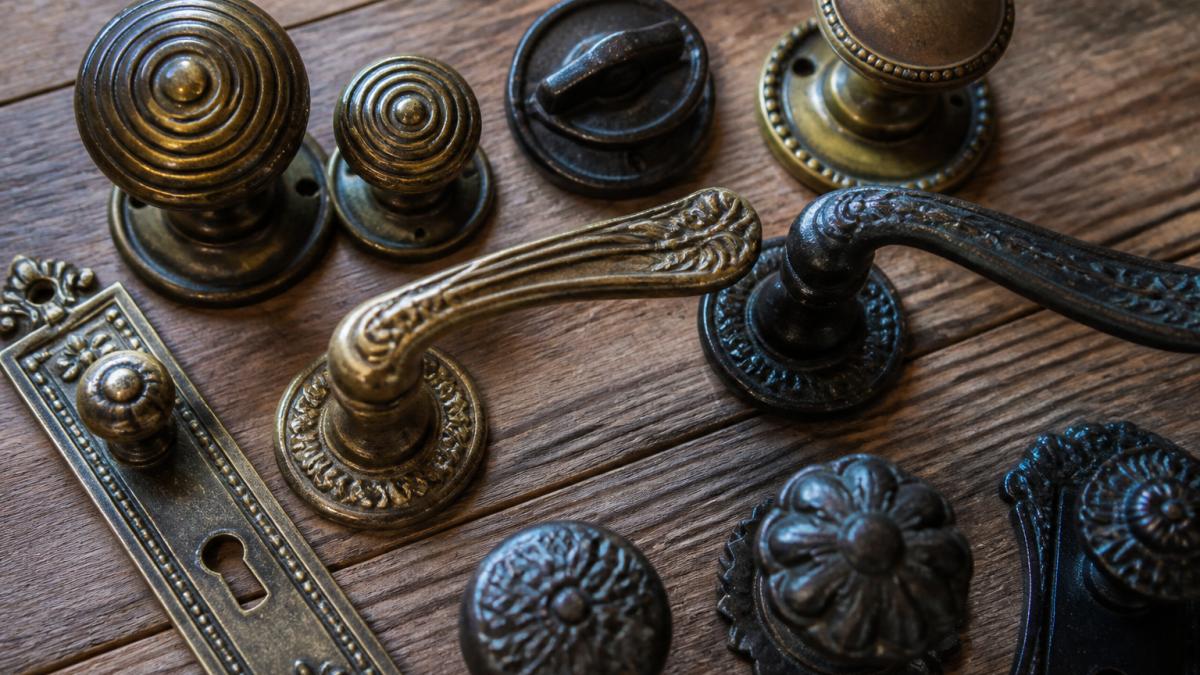
Solid brass door handles dominated the Victorian and Edwardian periods. Brass resists corrosion, takes a high polish, and develops a distinctive patina over decades.
Cast iron door furniture appeared in earlier Victorian homes and remained popular, especially for external hardware and service entrances.
Wrought iron, hand-forged and finished, appears in earlier Victorian work and higher-end pieces.
Bronze, copper, and pewter appear in quality Victorian hardware, though less commonly than brass or cast iron.
Finish Options and Their Historical Accuracy
Polished brass was the standard finish for interior door furniture in prosperous Victorian homes.
Antique or aged brass develops a warm, mottled patina over time, historically accurate for pieces in service 100+ years.
Blackened or oxidised finishes appear on cast iron and sometimes on brass or bronze.
Lacquered or varnished finishes protected brass and bronze in some periods, though these coatings rarely survive intact on genuinely old pieces.
Reproduction Victorian Door Hardware: Quality and Value
Reproduction hardware plays a legitimate role in restoration. When you need multiple matching pieces, can't source authentic hardware in your exact specification, or are working to a budget, quality reproduction pieces deliver period authenticity at a fraction of the cost of genuine antiques.
When Reproduction Makes Sense
Interior door sets often benefit from reproduction hardware, since original interior knobs and handles rarely survive in matching sets.
External hardware, especially on front doors and gates, sometimes justifies authentic pieces because these are the most visible and historically significant.
Heritage-listed properties often have guidelines about authenticity. Check your property's heritage schedule or consult your local heritage authority.
Assessing Quality in New Hardware
Quality reproduction hardware uses traditional casting or forging, not cheap injection moulding.
Check dimensions carefully. Reproduction knobs and handles should match Victorian specifications; one that's too large or too small looks wrong even if the design is period-correct.
Ask about materials. Solid brass or cast iron is standard; avoid pieces described as "brass-plated" or "pot metal" unless you specifically want a budget option. Plating wears through with use, revealing base metal underneath.
Heritage Door Hardware: Compatibility and Installation
Getting authentic Victorian door hardware to work on modern doors requires understanding Victorian construction standards and how they differ from contemporary building practices.
Measuring and Compatibility Checks
Victorian doors are typically thicker than modern ones, often 45mm to 50mm versus 35mm for standard contemporary doors.
Backplate size matters.
Centre door knobs, decorative knobs placed at the centre of a door panel, require specific door construction. Not all modern doors have the panel structure to accommodate them.
Mortice locks (locks set into the door's edge) are standard in Victorian doors. Modern doors sometimes have surface-mounted locks or simpler mechanisms.
Fitting Period Hardware to Modern Doors
For doors with multiple sets of old holes, consider the visual impact. Sometimes leaving old holes visible is acceptable; other times, you'll want to fill them.
Installation of authentic mortice locks requires precise chiselling to create the lock pocket. This is skilled work, if you're not confident, hire a joiner or heritage builder.
Buying Antique Hardware Safely: What to Check Before Purchase
Purchasing antique door handles and hardware online or remotely carries risks. You can't inspect the piece in person, and photographs don't always reveal condition issues. Protect yourself by knowing what to check.
Condition Assessment and Hidden Damage
Ask for detailed close-up photographs of any damage.
Rust on cast iron can indicate poor storage but doesn't necessarily mean the piece is unusable. Surface rust cleans off.
Broken or missing parts are common in antique hardware.
Bent or twisted handles suggest impact damage or misuse.
Check whether any repairs are visible. Solder joints, welded seams, or replaced components should be clearly disclosed. Quality repairs are acceptable; hidden repairs are not.
Return Policies and Supplier Guarantees
Ask about damage in transit. If hardware arrives broken, will the supplier replace it or refund your money? Do they offer insurance on shipments?
Some suppliers offer guarantees on authenticity. If a piece is later proven to be reproduction when it was sold as authentic, will they take it back?
Reputable suppliers like Restoration Station stand behind their stock. We provide detailed condition descriptions, answer questions thoroughly, and work with customers to resolve issues.
Period Styles: Colonial, Federation, and Edwardian Door Furniture
Different architectural periods used distinctly different door hardware. Matching your hardware to your home's actual era ensures visual authenticity and helps you source correctly.
Identifying Your Home's Architectural Period
Colonial homes (pre-1890s) typically feature simpler, sturdier hardware.
Victorian homes (1880s-1910) show elaborate, decorative hardware. Brass dominates. Knobs and handles are larger, often ornately cast. Backplates are prominent and decorative.
Federation homes (1890s-1915) blend Victorian elaboration with emerging Art Nouveau influences. Hardware shows flowing, organic lines.
Edwardian homes (1901-1910) feature lighter, more refined hardware than Victorian work. The aesthetic moves toward elegance over ornament. Art Nouveau influences appear more strongly.
Matching Hardware to Your Property's Era
Consult your home's original plans or heritage documentation if available, as these often specify hardware finishes and styles.
Photograph any original hardware you find. Bring these images to a heritage hardware specialist or conservation architect.
Don't assume all hardware in your home is original.
When sourcing replacement hardware, prioritise period consistency over personal preference.
Different architectural periods used distinctly different door hardware styles and materials.
| Period | Primary Materials | Design Characteristics | Hardware Aesthetic |
|---|---|---|---|
| Colonial (pre-1890s) | Cast iron, wrought iron, brass in quality work | Smaller knobs, smaller or absent backplates | Simpler, utilitarian |
| Victorian (1880s-1910) | Brass dominant | Larger ornate knobs, prominent decorative backplates, centre door knobs common | Elaborate, ornamental |
| Federation (1890s-1915) | Brass standard | Flowing organic lines, Art Nouveau influences | Blends Victorian elaboration with emerging Art Nouveau |
| Edwardian (1901-1910) | Brass | Asymmetrical naturalistic designs, lighter than Victorian | Refined elegance over ornament |
Getting Expert Advice for Complex Restoration Projects
Major restoration projects, especially on heritage-listed properties, benefit from professional guidance.
Heritage consultants and conservation architects specialise in period-appropriate restoration.
Your local heritage authority can provide guidance on what's required for your property.
At Restoration Station, our team helps with this process.
Restoring a heritage home means honouring its history through thoughtful choices.
Frequently Asked Questions
How can I tell whether Victorian door hardware is genuinely antique?
Genuine antique Victorian hardware shows specific wear patterns, casting marks, and material characteristics that reproductions rarely replicate. Solid brass pieces develop a natural patina over decades, whilst cast iron exhibits consistent surface texture and weight distribution authentic to the era. Look for hand-finished details, uneven edges from original casting, and signs of age such as minor corrosion or wear on pivot points. Reputable suppliers can provide provenance information and detailed condition reports that distinguish authentic pieces from modern recreations designed to look old.
What's the difference between antique and reproduction Victorian door hardware?
Antique hardware is original to the Victorian, Edwardian, or Federation period and carries genuine historical value, material integrity, and unique character marks. Reproduction hardware is newly manufactured to replicate period styles using modern techniques, offering consistency, availability, and lower cost. Authentic pieces may show imperfections, patina, or wear; reproductions are typically uniform and pristine. For heritage-listed properties, authenticity may be a requirement; for other period homes, high-quality reproductions provide period-appropriate aesthetics with practical durability and warranty protection.
Can Victorian door hardware be fitted to a modern door?
Yes, Victorian hardware can be adapted to modern doors, though compatibility requires careful measurement and sometimes minor modifications. Modern doors often have different bore sizes, backset depths, and material thickness than original period doors. Specialist suppliers can advise on adapters, spacers, or alternative mounting solutions that preserve the authentic look whilst ensuring secure, functional installation. Professional heritage builders routinely fit period hardware to contemporary door frames, and expert guidance ensures the hardware functions reliably without compromising either the fixture or the door.
What should I check before buying replacement door knobs and handles?
Before purchasing, verify the bore size, backset measurement, and spindle length required by your existing door or frame. Inspect product photos and condition reports for signs of damage, corrosion, or repair work that might affect function. Confirm the finish (antique brass, polished brass, cast iron) matches your period style and existing fixtures. Check the supplier's return policy, warranty coverage, and condition guarantee. Request detailed information about authenticity claims, material composition, and any restoration or conservation work already completed on the piece.