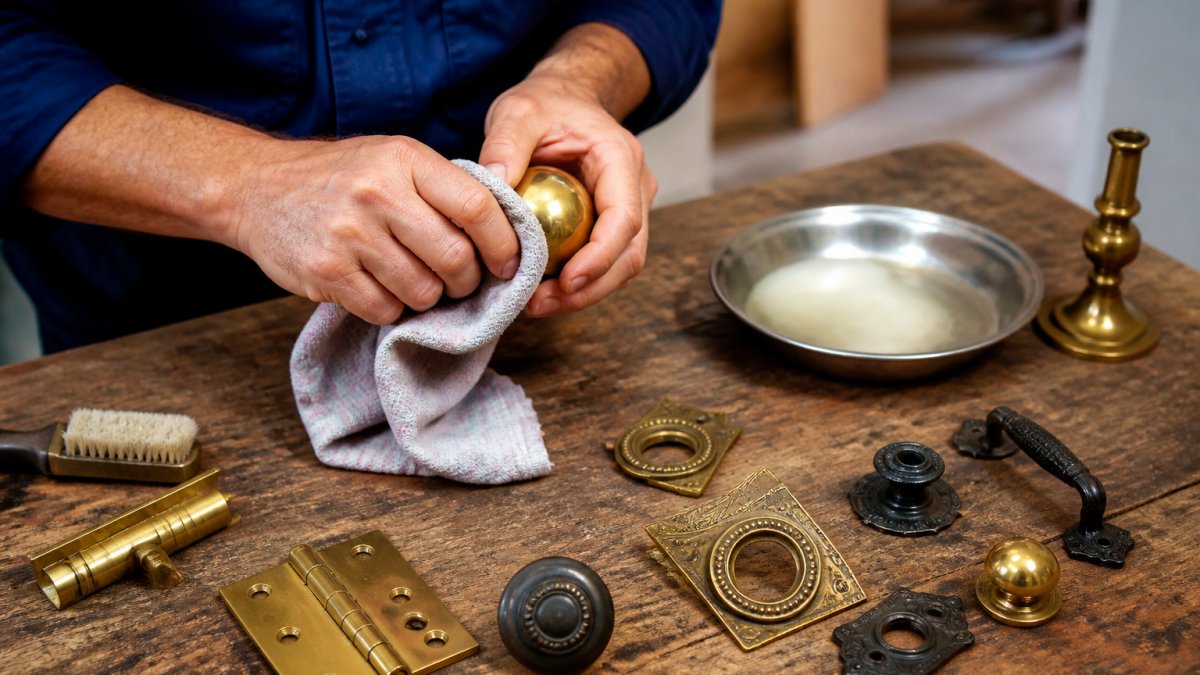
Last Updated: October 25, 2026
Quick Summary
Maintain period architectural fixtures by inspecting them before cleaning, then following a written schedule of monthly dusting, seasonal lubrication and checks, and an annual full inspection with a licensed electrician's wiring check. Clean gently to preserve patina, control moisture on cast iron, and repair original pieces rather than replacing them.
- Dust brass hardware and light fittings monthly with a soft, dry cloth.
- Lubricate door hinges and locks every three months, using little lubricant.
- Inspect and recoat cast iron fireplaces before and after each heating season.
- Never polish lacquered brass; a damp wipe is all it needs.
- Call a licensed electrician for any wiring repair, rewiring or new fitting installation.
Table of Contents
- Start With a Fixture Inspection Before You Clean Anything
- A Fixture-by-Fixture Maintenance Schedule for Period Homes
- How to Clean Antique Brass Fixtures Without Stripping the Patina
- Heritage Lighting Maintenance: Dust, Wiring and Glass
- Cleaning Cast Iron Fireplaces and Keeping Them Rust-Free
- Period Door Hardware Care: Hinges, Handles and Locks
- Repair or Replace? A Decision Guide for Damaged Fixtures
- When to Call a Specialist or Licensed Electrician
- Frequently Asked Questions
Start With a Fixture Inspection Before You Clean Anything
Learning how to maintain period architectural fixtures starts with looking, not scrubbing. A slow inspection before you touch anything tells you what you are dealing with, and it stops small problems from becoming expensive ones. At Restoration Station, we have spent 35 years helping owners of heritage-listed, Colonial and Federation-style homes keep their original details intact, and the pattern is always the same: the homes that age well are the ones inspected regularly.
Period architectural fixtures are the fixed and fitted elements that give an older building its character: brass door handles, ceiling roses, light fittings, cast iron fireplaces, hinges, locks and outdoor hardware. They are usually original to the house, often irreplaceable, and rarely made from materials you would choose today.
What to Check on Every Fixture
Run through the same short checklist each time, room by room:
- Loose fittings: wobbling handles, sagging hinges, ceiling fittings that move when touched
- Corrosion: green crust on brass, orange bloom on iron, white powder on zinc or aluminium
- Cracks and chips: hairline splits in glass shades, crazing in ceramic, flaking paint on metal
- Finish wear: thin patches where the original finish has rubbed away
- Water damage: staining, soft timber or bubbling paint near outdoor fixtures
- Wiring clues: flickering lights, warm switch plates, a faint burning smell
Watch out: a warm switch plate or a burning smell near a light fitting is a stop signal. Switch the circuit off at the board and get a licensed electrician to look at it before you use that fitting again.
Write down what you find and date it. A simple notebook or phone note becomes your maintenance history, and it is genuinely useful when you need replacement parts or specialist advice.
A Fixture-by-Fixture Maintenance Schedule for Period Homes
A written maintenance schedule is the single biggest difference between fixtures that last decades and fixtures that quietly deteriorate. Most owners clean when something looks dirty and repair when something breaks. That reactive approach is why so many original details end up replaced rather than preserved.
Below is the routine we suggest to owners working through a period home. Adjust the frequency for climate: coastal homes need more frequent checks because salt air speeds up corrosion, and humid areas need closer attention to mould and timber.
| Fixture | Task | Frequency |
|---|---|---|
| Brass hardware | Dust and dry wipe | Monthly |
| Light fittings | Dust shades, check for looseness | Monthly |
| Door hinges and locks | Lubricate, check alignment | Every 3 months |
| Cast iron fireplaces | Inspect for rust, check sealant | Seasonal |
| Outdoor fixtures | Check coating, clear debris | Seasonal |
| Full property inspection | All fixtures, written record | Annually |
| Wiring check | Licensed electrician | As recommended |
Monthly, Seasonal and Annual Tasks
Split the work into three rhythms so nothing gets forgotten:
- Monthly: dust every fixture with a soft cloth, check for wobble, note any change
- Seasonal: lubricate hinges, inspect outdoor fixtures for weather exposure, check fireplace condition before and after the heating season
- Annually: a full walk-through with your written record, plus a wiring inspection by a licensed electrician
The annual inspection is the one people skip. It is also the one that catches slow damage while it is still cheap to fix.
How to Clean Antique Brass Fixtures Without Stripping the Patina
The goal when you clean antique brass fixtures is to remove dirt, not history. Patina is the darkened, mellowed surface that develops over decades, and it is part of what makes an original fixture valuable. Aggressive polishing strips it away in minutes and leaves brass looking new and, frankly, wrong for the house.
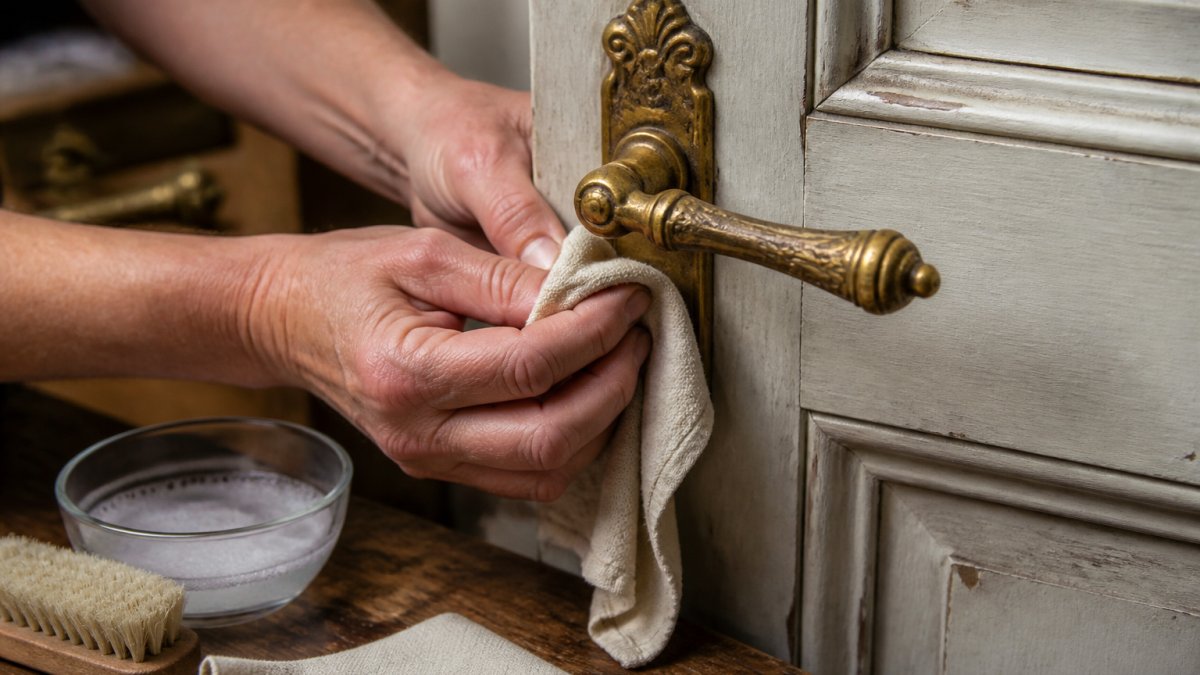
Here is the method we recommend:
- Dust first with a dry, soft cloth. Most of the grime comes off here.
- Mix a few drops of mild soap in warm water.
- Dampen a cloth, wring it out well, and wipe the surface gently.
- Dry immediately with a clean cloth. Never let water sit on brass.
- Leave the patina alone. Only polish if the owner genuinely wants a bright finish, and then only on a small test area first.
What most guides miss is that lacquered brass and unlacquered brass need different care. Lacquered surfaces only need a damp wipe. Polishing a lacquered fixture wears through the coating and creates patchy results that are very hard to reverse.
Heritage Lighting Maintenance: Dust, Wiring and Glass
Heritage lighting maintenance comes down to three things: keeping glass clean, keeping fittings tight, and knowing when the wiring is a job for a professional. Original light fittings are often the most fragile fixtures in the house, and they are also the ones carrying live electricity.
For routine care:
- Switch the circuit off before touching any fitting
- Dust glass shades with a soft, dry cloth or a brush attachment on a vacuum
- Wash removable glass in warm water with mild soap, then dry fully before refitting
- Check that ceiling roses and mounting screws are firm, not overtightened
- Look for cracked glass, perished flex and discoloured fittings
Electrical safety is where we draw a firm line. You can read the Electrical Regulatory Authorities Council guidance on electrical safety for how licensing works across states.
If you are matching a replacement fitting to the house, choose one that suits the architectural style rather than the newest design in the catalogue. A Federation home and a Colonial home want different proportions and finishes, and getting that right matters more than the fitting itself.
Cleaning Cast Iron Fireplaces and Keeping Them Rust-Free
Cleaning cast iron fireplaces is mostly about moisture control. Cast iron is tough, but it rusts the moment bare metal meets damp air, and a fireplace sits in exactly the spot where both collect.
Our approach:
- Brush out ash and soot with a stiff brush, then vacuum with a brush attachment
- Wipe the surface with a barely damp cloth and dry it straight away
- Check for rust blooms, especially around the grate, the firebox edges and the hearth
- Treat light surface rust with a fine abrasive pad, then recoat
- Apply a rust-inhibiting coating or a thin layer of suitable blacking to bare patches
- Keep the fireplace dry: fix damp, improve ventilation, and never seal a fireplace while it is still wet
Seasonal timing matters. Before the heating season, inspect and recoat. After it, clean out ash properly, because ash holds moisture against the metal all summer. That single habit prevents more corrosion than any product on the shelf.
If a fireplace has cracked panels, missing parts or heavy structural rust, stop and get specialist advice. Cast iron repairs are not a sanding-and-painting job, and the wrong repair can crack an original piece beyond saving.
Period Door Hardware Care: Hinges, Handles and Locks
Period door hardware care is the easiest maintenance in the house and the most commonly neglected. Hinges, handles and locks take constant use, and small issues compound fast.
A simple routine:
- Hinges: apply a drop of suitable lubricant to each hinge twice a year, and check screws for tightness. Squeaks are usually dryness, not failure.
- Handles: dust and wipe monthly, and check that the spindle and fixings are firm. A loose handle wears the hole in the door and eventually strips it.
- Locks: lubricate sparingly with a dry lubricant rather than oil, which attracts grit. Test the action monthly.
- Strike plates: check alignment. A door that needs a shove to close is wearing its latch and its frame.
A common mistake is over-oiling. Too much lubricant collects dust and turns into a gritty paste that wears moving parts faster than dryness would. Little and often beats a heavy application.
When a handle or escutcheon is beyond repair, matching the replacement to the original style keeps the door looking right. Sourcing period-appropriate parts is where specialist suppliers earn their keep, and it is worth asking for guidance rather than guessing from a photo.
Repair or Replace? A Decision Guide for Damaged Fixtures
Repair is almost always the better choice for original fixtures, and replacement should be the last resort. Original pieces carry the history of the house, and reproductions rarely match the weight, finish and proportion of the real thing.
Use this decision guide:
| Situation | Recommended action |
|---|---|
| Surface dirt or dull finish | Clean and preserve |
| Light surface rust | Treat and recoat |
| Loose fixings or worn screws | Tighten or replace fixings only |
| Worn hinge or latch mechanism | Repair or replace the mechanism, keep the visible hardware |
| Cracked glass shade | Source a matching replacement part |
| Hairline crack in cast iron | Specialist assessment before any use |
| Missing original fixture | Source a period-appropriate match |
| Damaged wiring or fittings | Licensed electrician, no exceptions |
The rule we give owners: if the visible, character-defining part is sound, repair around it. If the structural part is compromised, get specialist advice before you spend anything.
Cost is a fair consideration, but compare like with like. A repair that preserves an original fixture usually costs less than replacing it with something of comparable quality, and the original holds its value in a way a reproduction does not.
When to Call a Specialist or Licensed Electrician
Some jobs are maintenance. Others need a specialist, and knowing the difference protects both the fixture and you.
Call a licensed electrician for:
- Any wiring repair, rewiring or new fitting installation
- Warm switch plates, burning smells, flickering or buzzing fittings
- Old flex or perished insulation
- Any work inside a ceiling rose or switch mechanism
Call a heritage restoration specialist for:
- Structural cracks in cast iron
- Missing or badly damaged original components
- Polychrome or decorated finishes
- Anything where the wrong repair would reduce the fixture's value
For general guidance on caring for significant places, the Heritage Council of Victoria guidance on heritage places is a useful starting point, and state heritage bodies publish advice specific to listed properties.
A good specialist will tell you when a fixture does not need their help. If someone recommends replacing an original piece without explaining why repair will not work, get a second opinion.
Maintaining period fixtures is a habit, not a project.
Restoration Station has spent 35 years supplying traditional home restoration products and architectural hardware for heritage-listed, Colonial and Federation-style homes.
Frequently Asked Questions
How often should period architectural fixtures be inspected?
Check high-use fixtures such as door handles, hinges and light switches monthly, and inspect the full house seasonally. Outdoor fixtures and cast iron need a closer look before and after winter, when moisture and temperature swings do the most damage. Keep a simple written log of each inspection so you can spot slow changes like new corrosion, hairline cracks in glass or loosening screws before they become expensive repairs.
Can you use modern cleaning products on heritage fixtures?
Most modern household cleaners are too harsh for period architectural fixtures. Abrasive creams, ammonia-based sprays and acidic descalers can strip original finishes, dull brass patina and damage aged glass or timber surrounds. Stick to a soft cloth, mild soap and warm water for routine cleaning, and test any product on a hidden area first. If a fixture has a delicate polychrome finish or heavy tarnish, get specialist advice before touching it.
How do you prevent corrosion on period metal fittings?
Corrosion on period metal fittings comes down to moisture control. Dry each fixture thoroughly after cleaning, keep outdoor fittings clear of pooled water and leaf litter, and apply a thin coat of rust-inhibiting or protective coating to cast iron and exposed steel at least once a year. Indoors, fix leaking gutters and rising damp near fireplaces and windows, because constant humidity will undo any coating within months.
When should an old light fixture be checked by a licensed electrician?
Call a licensed electrician if you notice flickering that persists after a bulb change, buzzing or crackling sounds, scorch marks, a burning smell, exposed or perished wiring, or a fixture that heats up more than it used to. Old fabric-insulated wiring and brittle bakelite fittings are common in period homes and can fail without warning. Electrical work must be done by a licensed electrician to comply with Australian wiring rules, so never open a fitting yourself.