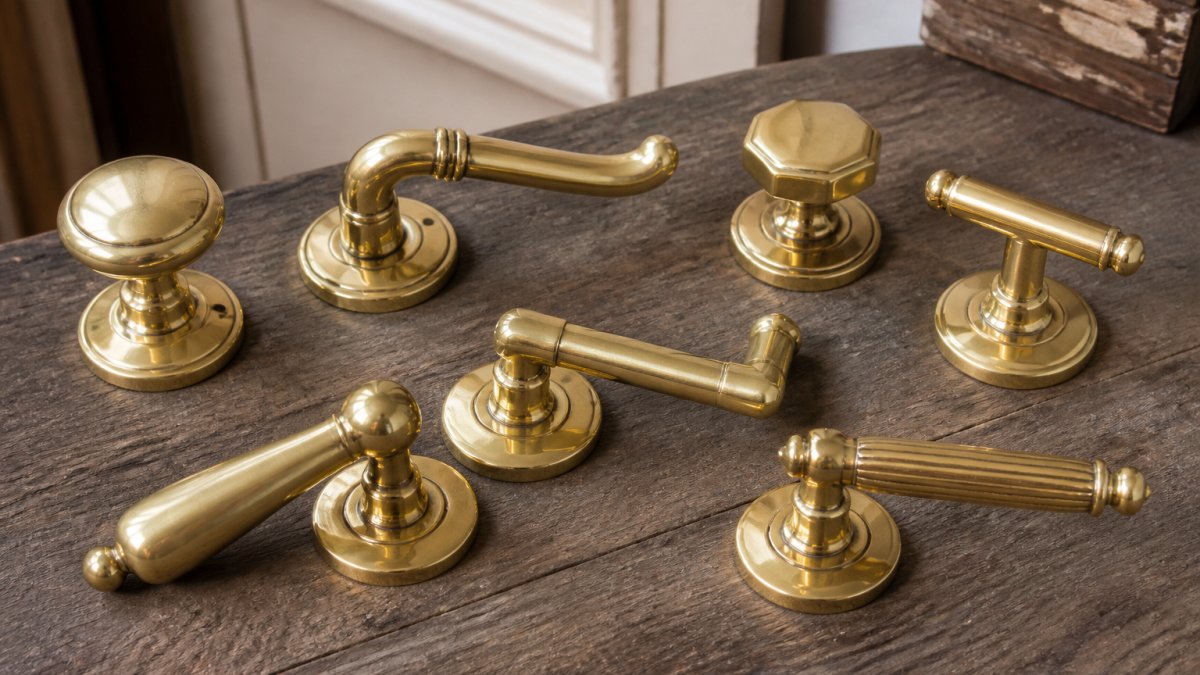
Last Updated: October 26, 2026
Quick Summary
Solid brass door handles are the durable choice for colonial homes because the metal matches the era, resists corrosion, and can be repaired rather than replaced. Choose aged brass for most colonial interiors, and always check the lock's backset and spindle before ordering.
- Aged brass usually suits colonial interiors best, hiding fingerprints better than mirror polish.
- Clean brass with warm water, mild dish soap and a soft cloth, then dry thoroughly.
- Genuine solid brass is dense, non-magnetic and noticeably heavier than plated zinc or steel.
- Measure the existing lock's backset and spindle before ordering new furniture.
- Never polish lacquered handles with metal polish, as it cuts the coating.
Table of Contents
- Why Colonial Homes Deserve Solid Brass Door Handles
- Choosing Brass Door Handle Finishes for Period Interiors
- Colonial Style Door Knobs: Matching Era and Function
- How to Clean Brass Door Handles Without Damaging the Patina
- Spotting Genuine Solid Brass Before You Buy
- Common Mistakes When Fitting Brass Handles in Older Doors
- Enquire About Brass Door Handles for Your Restoration Project
- Frequently Asked Questions
Why Colonial Homes Deserve Solid Brass Door Handles
Solid brass door handles are the right choice for colonial homes because the metal matches the era, ages gracefully, and can be repaired rather than replaced. At Restoration Station, we have spent 35 years helping owners of heritage and colonial properties source fittings that look correct and last. Durable brass door handles for colonial homes are not a stylistic nicety; they are part of the building's fabric.
Cast iron and steel were common in early colonial construction, but brass became the standard for door furniture because it resists corrosion and takes detailed casting well. A solid brass lever or knob develops a warm, uneven patina that no lacquered reproduction can fake. It also wears in rather than out: a worn spindle or spring can be re-pinned, where a plated handle is usually finished once the coating fails.
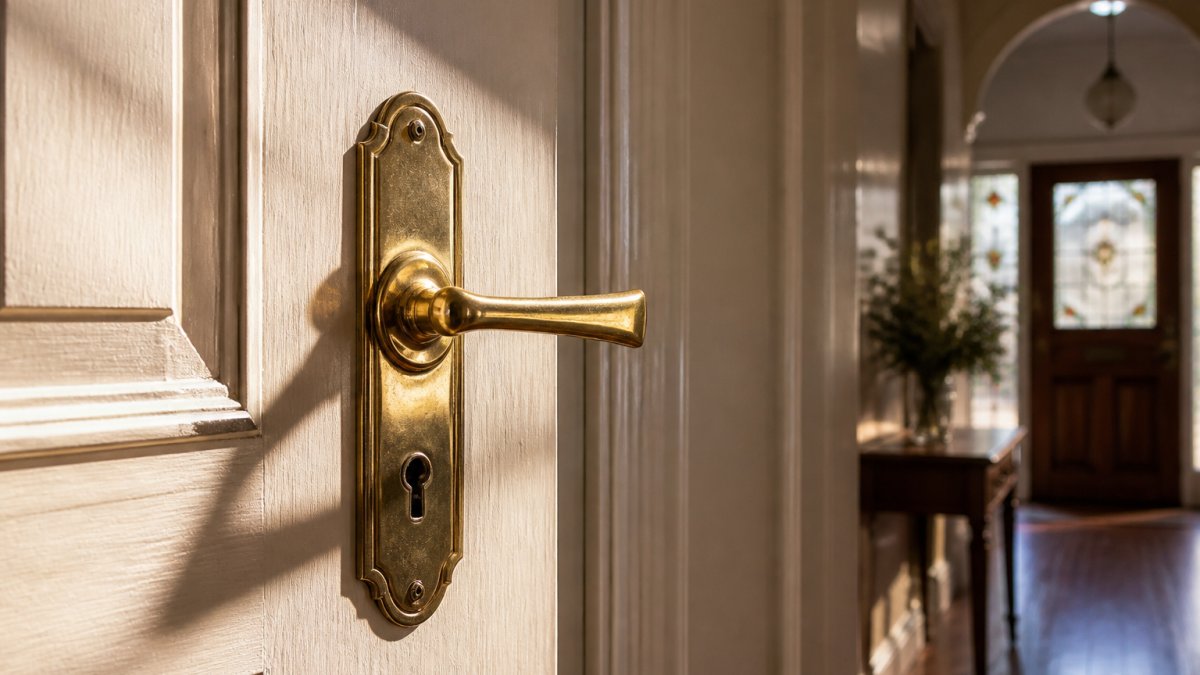
There is a practical argument too. Older doors are rarely square, and their lock cases were cut for a specific backset and spindle size. Solid brass furniture can be drilled, filed and re-threaded to suit an existing mortice lock, while hollow castings crack under the same treatment. If you are restoring rather than replacing the door, that flexibility matters more than the finish.
Choosing Brass Door Handle Finishes for Period Interiors
Brass door handle finishes fall into three broad groups: polished, aged and lacquered. Polished brass is bright and reflective, closest to how a handle looked when new. Aged or antique brass is chemically darkened to suggest decades of handling. Lacquered brass has a clear coating that holds the shine but will eventually wear through at the touch points.
For a colonial interior, aged brass usually sits most comfortably. It reads as original without looking neglected, and it hides fingerprints better than a mirror polish. Polished brass suits formal front doors and drawing rooms where the hardware was meant to impress. Lacquered finishes are best kept for low-traffic doors, because once the coating breaks down the wear looks patchy.
- Polished brass: bright, formal, needs regular attention
- Aged brass: muted, forgiving, blends with older timber
- Lacquered brass: low maintenance until the coating fails
- Unlacquered brass: develops patina fastest, easiest to revive
One point most guides skip: finish choice should follow the room, not the catalogue. A dark hallway with little natural light will make aged brass look almost brown, while the same finish in a sunlit room reads golden.
The article groups brass finishes into four types, each with a distinct look and upkeep.
| Finish | Look | Key difference |
|---|---|---|
| Polished brass | Bright and reflective | Closest to how a handle looked when new |
| Aged brass | Chemically darkened, muted | Hides fingerprints better than mirror polish |
| Lacquered brass | Clear coating holds the shine | Low maintenance until the coating fails |
| Unlacquered brass | Develops patina fastest | Easiest to revive |
Colonial Style Door Knobs: Matching Era and Function
Colonial style door knobs should match both the period of the house and the way the door is used. A knob set on a heavy front door needs a stronger spring and a longer backplate than one on a bedroom cupboard. Getting the era right is half the job; getting the mechanism right is the other half. Maintaining this level of historical integrity extends beyond the entryway, as period-perfect window shades provide the same essential balance of architectural accuracy and functional longevity for the rest of your home.
Early colonial patterns favour simple round or oval knobs on a plain rose, with minimal decoration. Later colonial and Federation interiors often carry more elaborate backplates and keyhole escutcheons. If you are unsure which applies to your property, our team can help you match patterns to the age of the joinery rather than guessing from photographs.
Function deserves equal weight. Knobs are awkward for anyone with limited grip strength, and levers are often the more practical choice on frequently used doors. Heritage guidance generally accepts a well-matched lever where access matters, provided the style is sympathetic.
How to Clean Brass Door Handles Without Damaging the Patina
The safest way to clean brass door handles is warm water, a little mild dish soap and a soft cloth, followed by a thorough dry. That removes handling grime without stripping the surface. Abrasive pads, bleach-based sprays and acidic cleaners will cut through patina and leave bright, blotchy patches that take years to even out.
For heavier tarnish, a paste of bicarbonate of soda and water applied sparingly, then rinsed and dried, will lift discolouration without attacking the base metal. Work on a small hidden area first. Never leave a wet handle to air dry; moisture trapped under a rose is what causes the green spotting people mistake for damage.
Watch out: lacquered handles should never be polished with metal polish, because the compound cuts the coating and creates cloudy patches that cannot be repaired.
- Wipe weekly with a dry soft cloth
- Wash with mild soap and water monthly
- Dry immediately, especially around the rose
- Avoid abrasive pads and acidic cleaners
- Re-wax unlacquered brass once or twice a year
Spotting Genuine Solid Brass Before You Buy
Genuine solid brass is dense, non-magnetic and consistent in colour where it has worn. Plated zinc or steel looks similar in a photograph but feels lighter, and a magnet will often reveal a steel core. Where the finish has rubbed at a high-touch point, solid brass shows the same yellow metal underneath; plating shows a grey or white base.
Weight is the simplest test. Compare two handles of the same pattern in your hands and the solid brass one will feel noticeably heavier. Look also at the edges of the casting: sharp, thin edges suggest a hollow shell, while solid brass has a slightly softer, thicker profile.
Ask what the base metal is, not what the finish is called. "Brass finish" and "solid brass" are different claims, and only the second tells you what you are actually buying.
Common Mistakes When Fitting Brass Handles in Older Doors
The most common mistake is forcing new furniture onto an old lock case without checking the backset and spindle. A handle that does not align puts sideways load on the mechanism, and the spring fails within months. Measure the existing lock before ordering anything.
Second is over-tightening. Older timber moves with the seasons, and a screw driven hard into dry hardwood will split the stile or strip its thread. Third is mixing finishes on the same door: a polished lever with an aged escutcheon looks like a mistake, because it is one.
A fourth, less obvious error is discarding original hardware. Where a spindle, spring or screw is worn, repair is usually cheaper and more authentic than replacement. Keep the originals even if you swap them out.
Enquire About Brass Door Handles for Your Restoration Project
Matching hardware to a colonial home takes more than picking a pattern you like online. It takes knowing the age of the door, the lock case behind it and the finish that will sit correctly in the room. That is the part we do every day.
Restoration Station stocks many traditional architectural hardware and period fittings, and our team can advise on the right brass door handles for your property. We ship across Australia, and we are happy to work through a multi-door project with consistent quality across every order. Get in touch with Restoration Station and let us help you specify handles that will still be on the door in another fifty years.
Frequently Asked Questions
Are brass door handles durable enough for everyday use?
Solid brass door handles are among the most durable options for a period home. The material is a copper and zinc alloy that resists corrosion and holds its shape under constant use, which is why so many original handles survive a century or more. The key distinction is solid versus plated: a plated handle has a thin brass coating over a cheaper base metal, and once that coating wears through at the grip point, the handle is finished. Solid brass wears in rather than out, developing a patina that many owners of colonial homes prefer to keep.
Which brass door handle finishes suit a colonial-style home?
For colonial and Federation interiors, unlacquered brass, antique brass and aged bronze are the most faithful choices. Unlacquered brass starts bright and darkens naturally with handling, which matches how original hardware aged. Antique brass gives that mellow depth immediately, so it suits rooms you do not want to wait on. Polished lacquered brass works in formal entry areas but needs the lacquer intact to stay bright. Chrome and satin nickel read as modern and tend to look out of place against architraves, skirtings and joinery of the period.
How do you clean brass door handles without stripping the finish?
Start with the mildest method: a soft cloth dampened with warm water and a drop of gentle dish soap, then dry immediately. For tarnish on unlacquered brass, a paste of bicarbonate of soda and lemon juice applied sparingly, left for a minute and rinsed well will lift discolouration without harsh abrasives. Avoid steel wool, bleach-based cleaners and ammonia, which scratch the surface and attack lacquer. On lacquered handles, clean with water only and never polish, because polishing through the coating leaves patchy, uneven wear.
How can you tell whether a door handle is solid brass?
Weight is the first clue: solid brass is noticeably heavier than a plated or die-cast zinc handle of the same size. Look at the edges and any engraved detail, because plated handles often show a different colour metal where the coating has thinned. A magnet will not stick to solid brass, though it may cling to a steel spindle or internal mechanism. Ask the supplier directly for the material specification and the brass grade rather than relying on a listing photo, and check whether matching escutcheons and hinges use the same alloy.