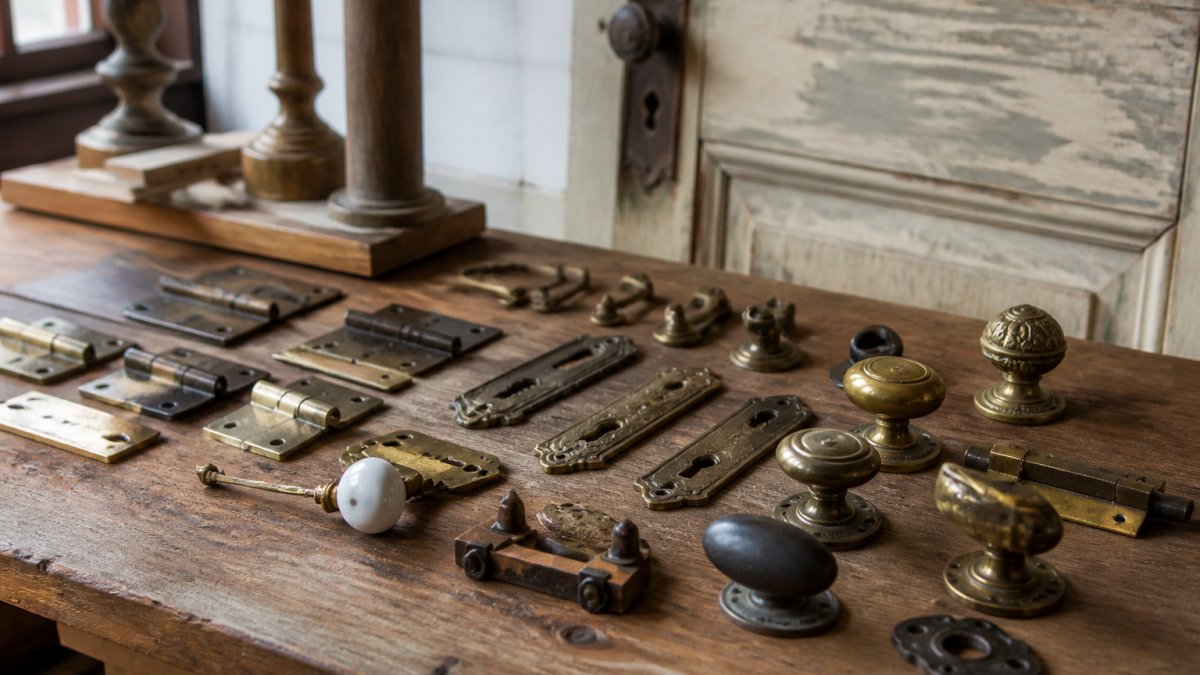
Last Updated: November 3, 2026
Quick Summary
A heritage home restoration hardware guide should start before renovation work begins, because fittings chosen last from stock are the most common cause of returns on period hardware. Audit every existing handle, hinge, latch and letterplate first, then date the house rather than its later renovation and set a hardware schedule by room, finish and quantity.
- Photograph every handle, hinge, latch and letterplate before anything is removed.
- Ordering a matching set before checking existing mortise depths is the most common cause of returns.
- Federation hardware is defined by restraint: brass levers, long rectangular backplates and clean curves.
- Sash windows need the sash lift, sash fastener and pulley weight system working together.
- Measure screw centres before ordering, because reproduction fittings rarely match original hole spacing.
Table of Contents
- Planning a Heritage Restoration: A Hardware-First Approach
- Heritage Door Hardware: Matching Fittings to Your Home's Era
- Federation Door Hardware: What Suits a 1900s to 1920s Home
- Traditional Window Hardware for Period Homes
- Restoring Original Door Hardware: Repair, Reproduction or Replace
- Finishes, Materials and How They Age in Period Interiors
- Measuring, Compatibility and Installation Details That Decide the Fit
- Sourcing Your Heritage Hardware: What to Confirm Before You Order
- Frequently Asked Questions
Planning a Heritage Restoration: A Hardware-First Approach
Most heritage renovation budgets get eaten by structural surprises, yet the fittings that define a period home are usually decided last, in a rush, from whatever is in stock, which is why a heritage home restoration hardware guide should start earlier than that. A heritage home restoration hardware guide in 2026 should start earlier than that. Restoration Station has spent 35 years supplying traditional home restoration products, and we see projects stall when door furniture is chosen after the plaster goes up.
Hardware is the cheapest way to either confirm or destroy a period interior. Get the escutcheons, hinges and window latches right and a room reads as authentic the moment you walk in.
Here is the sequence we recommend:
- Audit what exists. Photograph every handle, hinge, latch and letterplate before anything is removed.
- Date the house, not the renovation. Later alterations often mask the original era.
- Set a hardware schedule listing every component by room, finish and quantity.
- Confirm approvals before ordering anything fixed to a facade.
- Order early. Hard-to-find pieces take time to source.
Watch out: ordering a full matching set before checking existing mortise depths is the single most common cause of returns on period hardware.
Heritage Door Hardware: Matching Fittings to Your Home's Era
The right heritage door hardware is the set that matches your home's construction date, not the date of its last renovation. A 1920s addition fitted with Victorian thumb-latches will always look wrong, even to visitors who cannot explain why.
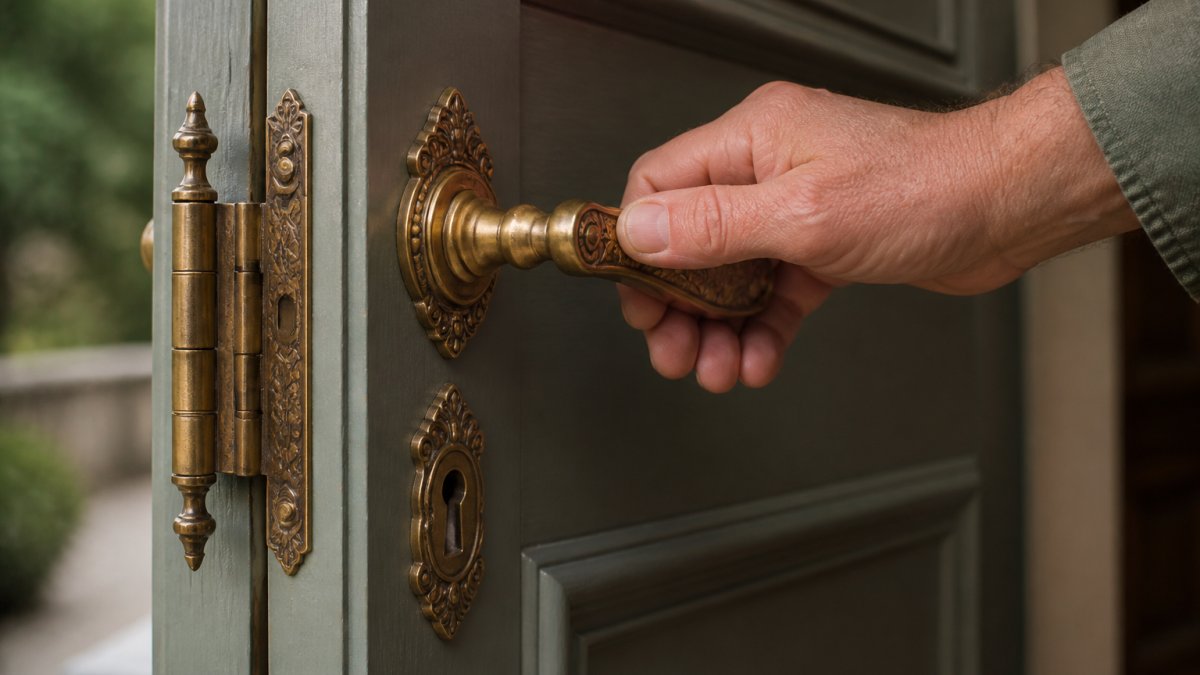
Era dictates three things: the lever or knob shape, the backplate style, and the finish. But era alone is not enough to order from. The practical work is matching era to component, room and function, then checking that the piece will physically fit the joinery you already have. A simple selection matrix, era down one axis, component across the other, can help prevent the mismatched-set problem before an order is placed.
A Component-Level Selection Matrix by Era
Use this as a starting schedule, then adjust for the specific house:
| Component | Colonial (pre-1850s) | Victorian (1850s-1900) | Federation (1900-1920s) |
|---|---|---|---|
| Front door furniture | Hand-forged iron thumb-latch, strap hinges, visible fixings | Polished or lacquered brass, decorative backplate, ceramic knob | Brass lever on long rectangular backplate, cleaner geometry |
| Internal door handles | Iron or timber knob, simple rose | Brass knob or lever, ornate escutcheon | Brass lever, stepped end, longer plate |
| Hinges | Strap or butterfly, black finish | Butt hinge, brass or iron, decorative finial | Butt hinge, brass, plainer knuckle |
| Escutcheons | Minimal or none | Elaborate, often pierced | Long, narrow, restrained |
| Letterplate | Iron, simple flap | Brass, decorative surround | Brass, rectangular, simpler frame |
| Window fittings | Iron sash fasteners, simple lifts | Brass fasteners, ornate lifts | Brass fasteners, simpler plates, casement stays on interwar |
Matching the Component to the Room, Not Just the Era
A common pattern is to fit the whole house to the front-door era and then wonder why the kitchen and bathroom feel wrong. Service rooms were often fitted more plainly than reception rooms even in the same decade, and later bathrooms frequently used nickel or chrome rather than brass. A workable rule is to let the front door and main reception rooms set the era, then step down one level of ornament for service areas and match the bathroom to the period of its last sympathetic refit rather than the original build.
Colonial, Victorian and Federation Door Styles
- Colonial (pre-1850s): hand-forged iron, black or aged finishes, thumb-latches, strap hinges, visible fixings. When choosing reproduction pieces, check that the forging weight matches the door, because lightweight pieces can read as modern.
- Victorian (1850s-1900): polished or lacquered brass, decorative backplates, ceramic knobs, elaborate escutcheons. The ornament is the point, a plain rose on a Victorian door looks like a repair, not a restoration.
- Federation (1900-1920s): brass with simpler geometry, longer plates, lever handles becoming common. Restraint is the defining feature; over-ornamenting a Federation door is as wrong as under-ornamenting a Victorian one.
A common mistake is upgrading a Colonial door to Federation hardware because it photographs better. It never sits right in the frame.
Watch out: ordering a matching set by era before checking the existing mortise depth and backset is the most common cause of returns, the era can be right and the piece still will not seat.
Federation Door Hardware: What Suits a 1900s to 1920s Home
Federation door hardware is defined by restraint: brass lever handles, long rectangular backplates, and a preference for clean curves over Victorian ornament. If your home was built between 1900 and 1920, this is your reference point.
The details that matter most:
- Backplate length: Federation plates are typically longer and narrower than Victorian equivalents.
- Lever shape: gentle curves, often with a stepped end rather than a scroll.
- Finish: lacquered brass was standard; unlacquered brass has since aged to a warm patina.
What most guides miss is that Federation homes often mixed finishes room by room. A single uniform finish across the whole house can read as a modern reproduction rather than a restoration.
Traditional Window Hardware for Period Homes
Traditional window hardware is where most restorations fall short, because sash windows need three separate components working together: the sash lift, the sash fastener and the pulley weight system. Replace one without the others and the window will not operate smoothly.
For double-hung sash windows, check:
- Sash fasteners: match the plate style to the era; Federation fasteners are simpler than Victorian.
- Sash lifts: brass or iron, positioned to match existing screw holes where possible.
- Pulleys and cords: often the hidden failure point; inspect before ordering visible hardware.
In practice, this means measuring the existing screw centres before ordering. Reproduction fittings rarely match original hole spacing, and drilling new holes in original timberwork is a decision you cannot undo.
Restoring Original Door Hardware: Repair, Reproduction or Replace
Restoring original door hardware should always be the first option considered, because original cast and pressed pieces carry detail that reproductions rarely match. Repair is usually viable; replacement should be the last resort.
The decision comes down to three questions: is the piece structurally sound, is it complete, and is it safe to use?
Assessing Condition Before You Decide
- Check for cracks, especially at screw holes and hinge knuckles
- Confirm all components are present, including grub screws and spindle
- Test the mechanism through a full cycle
If a piece fails on structure or safety, reproduction is the sensible path. If it fails only on finish, restoration is almost always cheaper and more authentic.
Watch out: stripping original lacquer to "brighten up" aged brass permanently removes the patina that gives a period interior its depth.
Finishes, Materials and How They Age in Period Interiors
Finish choice decides how a restoration looks in five years, not five minutes. Brass, iron, bronze and nickel all age differently, and the aging is the point. The gap in most guides is that they stop at appearance and never explain what the finish will do, how to maintain it, or when aging becomes damage.
What Each Material Does Over Time
- Lacquered brass: stays bright, but lacquer wears through at high-touch points, handles, push plates, letterplate flaps, and looks patchy within a few years. Once the lacquer breaks, the brass underneath tarnishes unevenly and cannot be spot-corrected without stripping the whole piece.
- Unlacquered brass: develops a warm, uneven patina; the most authentic option for most periods. It will darken first in the recesses and around fixings, then across the flats. Visible change will develop over time, faster outdoors than indoors.
- Cast iron: durable and appropriate for Colonial and utility fittings; needs protection from rust. Interior iron is low-maintenance; exterior iron needs a reapplied protective coating, because rust creeps from screw holes and hinge knuckles first.
Maintenance Routines That Preserve Patina
The rule is to clean less than you think and never abrade. A soft cloth and a pH-neutral cleaner is enough for routine work. Avoid ammonia-based brass cleaners on unlacquered pieces, they strip patina back to bright metal and the piece will never age evenly again. For lacquered brass, clean with a damp cloth only; solvents and abrasives remove the coating.
Exterior Versus Interior Durability
Exterior fittings face salt, UV and constant moisture, and the finish that suits an interior will often fail outdoors within a season or two. Proper maintenance of these external elements extends to the threshold, where a precise custom screen door fitting ensures that the hardware remains shielded from the elements while preserving the structural integrity of the entryway.
Watch out: stripping original lacquer to "brighten up" aged brass permanently removes the patina that gives a period interior its depth, and on a piece with original tooling marks, it also removes the surface detail that distinguishes it from a reproduction.
Measuring, Compatibility and Installation Details That Decide the Fit
Measurement is where most online hardware orders go wrong. Before ordering, record the following for every component:
| Measurement | What to Record | Why It Matters |
|---|---|---|
| Backset | Distance from door edge to spindle centre | Determines latch compatibility |
| Centres | Distance between spindle and keyhole | Wrong centres mean the escutcheon will not fit |
| Plate dimensions | Height and width of existing backplate | Covers old screw holes and marks |
| Screw centres | Spacing of existing fixing holes | Avoids drilling original timber |
| Door thickness | Measured at the stile | Affects spindle and latch length |
| Mortise depth | Depth of existing latch pocket | Determines whether a new latch will seat |
Compatibility issues also arise from modern door thickness, fire-rated doors and security requirements. Where a heritage door must meet current security expectations, a concealed reinforcement plate is usually preferable to replacing the visible furniture.
Sourcing Your Heritage Hardware: What to Confirm Before You Order
Sourcing is the final filter, and it is where a good restoration schedule either holds together or falls apart. Confirm five things before committing to any supplier.
- Authenticity: ask whether a piece is an original, a period-accurate reproduction or a modern interpretation.
- Lead time: hard-to-find items can take weeks; order before trades need them on site.
- Consistency across orders: if you are fitting out a whole house, confirm the supplier can repeat the same finish and profile across multiple orders.
- Returns: check the policy for pieces that do not fit, particularly where you have measured from an existing component.
- Advice: a supplier who cannot tell you which era a fitting suits is a catalogue, not a specialist.
Restoration Station's team can help work through these questions with owners and builders, and offers expert advice on restoration, renovation and re-modelling projects.
Heritage hardware rewards planning more than any other part of a restoration.
Frequently Asked Questions
How do I choose hardware for a heritage home?
Start with the era of the building, not the look you like. A Colonial home suits plain, hand-forged ironwork, while Federation homes typically carry brass and copper-alloy fittings with decorative backplates. Check what survives on the property first, since original hinges, escutcheons and latches tell you the finish and scale that was used. Then confirm the door or window construction, because timber thickness and existing mortise cutouts limit what will fit. A specialist supplier can match a sample to your era and advise on reproduction pieces that keep the character intact.
How can I tell whether original heritage hardware can be restored?
Look at three things: structural soundness, surface loss and moving parts. Solid brass or cast iron that has surface tarnish or paint build-up usually restores well. Deep pitting, cracks at screw holes, or a spindle that has worn oval are harder to save. Check that hinges still have their knuckles intact and that lock cases are not rusted through. If more than a third of the original material is gone, reproduction is often the more reliable path. A restorer can assess a single piece before you commit to a full set.
Which door hardware suits a Federation-style home?
Federation homes, built roughly between 1890 and 1915, generally used brass and copper-alloy door furniture with decorative backplates, lever handles and matching escutcheons. Common details include scrollwork, reeded edges and a warm polished or lacquered brass finish. Entry doors often carried larger pulls and knockers, while internal doors used lighter lever sets. Matching the finish across a whole hallway matters more than matching any single piece, so buy a coordinated set rather than assembling mixed items over time.
What hardware details should I check before starting a heritage restoration?
Measure before you buy. Record door thickness, backset, spindle size, hinge leaf dimensions and the position of existing mortises. Photograph every original fitting and note which pieces are missing. Check whether your property sits under a heritage overlay, because some external alterations need approval before work starts. Confirm lead times for hard-to-find items so they arrive before trades are booked. Finally, decide which pieces you are restoring and which you are replacing, and keep the restored originals in the most visible positions.
Which finishes work well with traditional architectural hardware?
Polished brass, aged brass, unlacquered brass, blackened iron and satin bronze all sit comfortably in period interiors. Polished brass suits formal Federation and Victorian rooms and develops a soft patina if left unlacquered. Blackened iron works well on Colonial-style external doors and gates. Avoid bright chrome and brushed nickel in visible period spaces, as they read as modern. Keep one finish family through a hallway or facade, and let patina develop rather than polishing every surface back to a mirror shine.
Can modern hardware be used in a heritage home without compromising its character?
Yes, in the right places. Modern hardware is sensible for security deadlocks, bathroom privacy sets and any door where insurance or safety requirements apply. The trick is to keep the visible face period-appropriate and let the modern mechanism sit behind it. Choose a modern lock that accepts a period-style knob or lever, and match the finish to the surrounding fittings. Concealed fixings, sympathetic escutcheons and matching spindle sizes let you upgrade performance without changing how the door looks.