Last Updated: November 4, 2026
Quick Summary
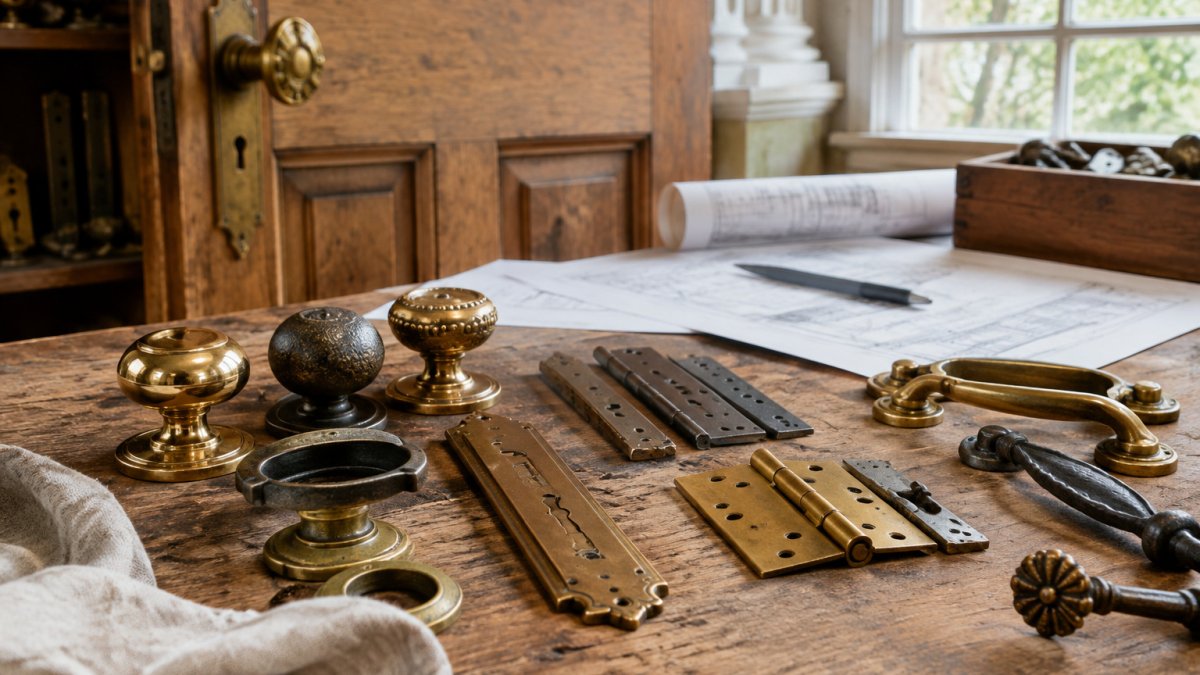
Architectural hardware is the metalwork that gives a period home its character, including door knobs, hinges, window latches and cabinet pulls. Match the level of ornament to your home's era, not just the metal, and measure door thickness, backset and spindle size before ordering.
- Victorian interiors favour ornate cast metal pieces, while Colonial homes tend to be plainer with simple iron latches.
- Heritage doors commonly have a backset of around 45-60 mm, so measure rather than assuming a modern 60 mm default.
- Older internal doors are often 35-40 mm thick, while external doors can run 44-50 mm or more.
- Repair original hardware first, since stiff or tarnished pieces are often better made than modern replacements.
- Complete the front entry and bathrooms first for the biggest visible and practical return.
Table of Contents
- Matching Architectural Hardware to Your Home's Period Style
- Heritage Door Hardware: Entry Sets, Knobs and Handles
- Choosing Traditional Door Knobs and Handles That Fit
- Window Hardware, Hinges and Cabinet Fittings
- Antique Door Hardware Restoration: Repair or Replace?
- Door Hardware Finishes: Patina, Lacquer and Living Metals
- Compliance, Accessibility and a Room-by-Room Hardware Audit
- Planning Your Hardware Order with Restoration Station
- Frequently Asked Questions
Matching Architectural Hardware to Your Home's Period Style
Architectural hardware is the metalwork that gives a period home its character: door knobs, hinges, window latches, cabinet pulls and the decorative details that tie a renovation together. At Restoration Station, we have spent more than 35 years helping owners of heritage-listed, Colonial and Federation properties source fittings that look and feel right for the building.
Hardware is a character-defining feature, not a finishing touch. The good news is that the market is growing steadily, with IMARC Group's architectural hardware market analysis projecting a compound annual growth rate of 3.90% through 2034, which means choice is widening rather than narrowing.
Victorian, Colonial and Federation Signatures
Each era has its own vocabulary. Victorian interiors favour ornate, hand-forged and cast metal pieces: elaborate backplates, decorative keyhole covers, heavy brass door knobs and turned timber. Colonial homes tend to be plainer, with simple iron thumb latches, strap hinges and modest brass fittings.
The practical rule: match the level of ornament, not just the metal. A heavily decorated knob on a plain Colonial door looks as wrong as a bare latch on a Victorian front door. If you are unsure which period your home actually represents, ask before you buy.
Heritage Door Hardware: Entry Sets, Knobs and Handles
Heritage door hardware is the first thing a visitor touches, so it carries more weight than any other fitting.
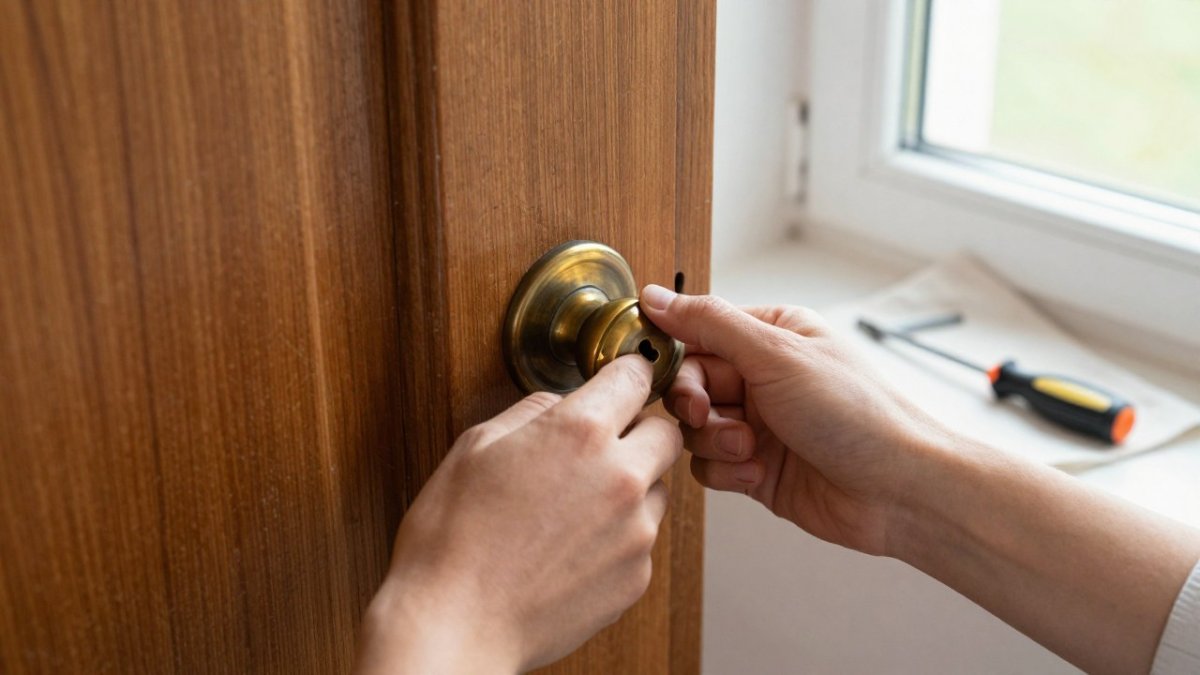
A common mistake is replacing only the knob and leaving the original backplate, which rarely lines up cleanly.
The five measurements that matter
- Door thickness. Older internal doors are often 35-40 mm, while external and front doors can run 44-50 mm or more. A tubular latch or mortise lock is rated for a thickness range; order outside it and the spindle will not reach or the rose will not clamp.
- Backset. This is the distance from the door edge to the centre of the spindle or keyhole. Heritage doors commonly sit around 45-60 mm, but older joinery varies. Measure the existing backset rather than assuming a modern 60 mm default.
- Spindle size. Traditional knobs and levers use a square spindle, commonly 8 mm on older fittings and 7 mm or 8 mm on many reproductions. A spindle that is too small will rattle and slip; too large and it will not enter the follower.
- Mortise dimensions. If you are keeping the original mortise lock, the new furniture must align with its existing spindle and keyway positions. Measure the mortise pocket height, width and depth, and the centres of the spindle and keyhole.
- Handing. Doors are handed left or right depending on which side the hinges sit and which way the door swings. Lever furniture and some entry sets are handed, so specify it correctly or the lever will point the wrong way.
Entry sets versus separate furniture
A full entry set combines the latch, deadbolt, handles and sometimes a night latch in one coordinated unit.
Watch out: mismatched spindle sizes and screw spacing can stop a fitting sitting flush.
Choosing Traditional Door Knobs and Handles That Fit
Traditional door knobs and handles need to suit three things at once: the period, the door, and the hand that uses them. Start with the door. Solid timber doors take heavier knobs and longer screws; hollow or glazed doors need lighter fittings and careful fixing points.
Then consider the finish and weight. Cast brass has a satisfying heft and ages gracefully. Lever handles suit households where grip strength matters, while knobs remain the more historically accurate choice for many Victorian and Federation doors.
Window Hardware, Hinges and Cabinet Fittings
Window hardware is where period homes most often lose their character. Sash lifts, sash fasteners, casement stays, window latches and Cremone bolts are all small pieces that quietly signal authenticity. On double-hung windows, a mismatched sash lift is immediately visible from both inside and out.
Hinges, pulls and cabinet handles deserve the same attention. Butt hinges should match the door weight and the original mortise depth; cabinet hardware should echo the room's dominant metal rather than introduce a new one.
Antique Door Hardware Restoration: Repair or Replace?
Antique door hardware restoration is usually worth attempting before replacement, especially on pieces that are original to the house. Original hardware carries the building's history, and it is often better made than modern equivalents.
A decision framework
Work through these tests in order for each piece:
- Is it original fabric? Hardware that is original to the building, or that appears in early photographs, carries heritage value and should be retained wherever it is safe to do so. Check with your local council or heritage adviser before removing anything visible from the street.
- Is it structurally sound? Look for cracks in cast brass or iron, stripped threads, worn spindle followers, bent or fatigued springs and hinge knuckles that have worn oval. Surface tarnish and stiff mechanisms are repairable; fractured castings usually are not.
- Can the mechanism be freed and adjusted? Stiff locks, rattling knobs and sagging levers are often fixed by cleaning out old graphite and grease, lubricating with a dry or light lubricant, tightening screws and adjusting strike plates. A locksmith can re-pin or service a traditional mortise lock rather than replace it.
- Can the finish be revived? Tarnish, light corrosion and flaking lacquer can often be cleaned back and re-lacquered or left to patinate. Deep pitting and corrosion that has eaten into the metal are harder to reverse without losing detail.
- Does it still meet the safety and security need? This is where retention and function can conflict. A decorative original knob on a front door may need to work with a modern deadbolt or a compliant lock, and egress doors need hardware that opens reliably under pressure.
Repair, replace like-for-like, or use a discreet modern alternative
- Repair when the piece is original, structurally sound and the fault is mechanical or cosmetic. Re-plating, re-lacquering, re-springing and re-pinning are all routine for traditional fittings.
- Replace like-for-like when the piece is damaged beyond safe repair, has already been altered beyond recognition, or is a later addition that does not match the period. Choose a reproduction that matches the original's profile, metal and finish rather than a generic modern fitting.
- Use a discreet modern alternative when function, security or accessibility genuinely demand it, for example a modern multipoint lock behind period-style furniture, or a lever on a door used by someone with limited grip. Keep the visible face period-appropriate and let the modern mechanism do the work behind it.
Watch out: replacing original hardware because it is stiff or tarnished is one of the most common and least reversible renovation mistakes.
A practical pattern is to restore the highly visible original pieces first, front entry, main living areas, and reserve replacement for later additions, damaged items and the places where safety or accessibility genuinely overrides retention.
Door Hardware Finishes: Patina, Lacquer and Living Metals
Door hardware finishes decide whether a fitting looks new or looks right. Living metals such as brass, bronze and copper develop a patina over time, darkening and softening in a way that suits old houses.
Think about maintenance before you choose. Unlacquered brass needs occasional polishing if you want it bright, or nothing at all if you like the aged look. Iron needs protection from moisture. The best finish is the one you are willing to look after.
Compliance, Accessibility and a Room-by-Room Hardware Audit
Compliance and accessibility matter as much as appearance, particularly on heritage-listed properties and in any renovation that requires approval. Heritage controls often focus on what is visible from the street and on original fabric, so check requirements with your local council or heritage adviser before removing original hardware. For access, lever handles and adequate clearance around doors make a practical difference for older residents and visitors.
A room-by-room audit keeps the project manageable:
| Room | What to Check | Priority |
|---|---|---|
| Front entry | Entry set, knob, keyhole cover, hinges | High: visible and heavily used |
| Living areas | Door knobs, cabinet pulls, window latches | Medium: consistency matters |
| Kitchen | Cabinet handles, drawer pulls | Medium: daily use and wear |
| Bedrooms | Knobs, window hardware, wardrobe fittings | Low: replace as budget allows |
| Bathrooms | Privacy latches, moisture-resistant finishes | High: function and durability |
Work through the list in priority order. Completing the front entry and bathrooms first delivers the biggest visible and practical return.
Planning Your Hardware Order with Restoration Station
A hardware order placed room by room, in the right sequence, saves both time and rework. Start with a full audit, confirm the period and finish, then order the high-use and highly visible pieces first so the house feels finished sooner.
This is where Restoration Station helps. As you plan the details that bring a historic home together, architectural lighting design can complement traditional hardware and help preserve the character of each room.
Frequently Asked Questions
How do I choose architectural hardware for a historic home renovation?
Start with the period and the original evidence. Check surviving hinges, latch plates and screw holes, since these reveal the size and style the door was built for. Match the metal to the era: cast iron and brass for Victorian, simpler brass and timber for Colonial, and lighter pressed metal for Federation homes. Then confirm fit by measuring door thickness and backset before ordering. A room-by-room audit helps you prioritise the entry and main living spaces first.
Should I restore or replace original door hardware?
Restore when the piece is structurally sound and original to the house. Cleaning, re-plating and re-springing a latch keeps the character-defining feature intact. Replace when metal is cracked, hinges are worn past safe use, or parts are missing and cannot be sourced. Keep any original piece you remove, even if you swap it out, as heritage advisers and future buyers value it.
What hardware suits a Federation-style home?
Federation homes typically use lighter, more decorative fittings than Victorian properties. Look for pressed brass or copper door knobs, slender lever handles, and window hardware such as casement fasteners and sash lifts in a matching finish. Cabinet hardware often featured simple turned timber or brass knobs. Avoid heavy cast-iron Gothic pieces, which belong to an earlier era, and keep finishes consistent across the entry so the front of the house reads as one period.
How can I check whether new hardware will fit existing doors?
Measure three things before ordering: door thickness, the backset (distance from the door edge to the centre of the knob or lever), and the existing mortise or latch cutout size. Photograph the door edge and the current hardware alongside a ruler. Older doors are often thicker or thinner than modern standard, so a reproduction that suits a new door may not seat correctly. Send measurements to the supplier and ask them to confirm compatibility before dispatch.
Which door hardware finishes work well in a traditional home?
Unlacquered brass, aged bronze and hand-forged iron are the safest choices because they develop patina that suits period interiors. Lacquered brass holds a bright look with less maintenance but can chip and flake over time. Avoid high-shine chrome or brushed nickel on a heritage facade, as these read as modern. Keep one finish family across the entry, and let interior rooms vary slightly if the original house did.
What should I consider when choosing hardware for a heritage-listed home?
Check with your local council or heritage adviser before changing anything visible from the street, as external door and window hardware is often a controlled element. Keep original pieces where possible and choose reproductions that match profile, scale and material rather than a generic modern equivalent. Accessibility matters too: lever handles and smooth latches can meet both heritage and mobility needs. Document what you remove so the change is reversible.
Ready to give your period home the fittings it deserves? Contact Restoration Station for a quick enquiry and let our team help you match the right architectural hardware to your renovation.