Last Updated: November 7, 2026
Quick Summary
To clean soot from a cast iron fireplace, let it cool for at least 24 hours, sweep out loose ash, dry wipe the surface, then wash with mild dish soap and warm water using a wrung-out soft cloth. Dry the iron immediately and finish with a thin coat of polish suited to your finish.
- Rub a hidden spot with a white cloth: black means paint, brown means rust, metallic means bare or polished iron.
- Wait at least 24 hours after the last fire before cleaning, and 48 hours before bagging ash.
- Never use steel wool, wire brushes, bleach, abrasive powders or vinegar on bare iron.
- For stubborn marks, work through dry brushing, soap, soap paste and a dedicated cast iron cleaner in order.
- A dry wipe weekly and polish every few months keeps soot sitting on top of the surface.
Table of Contents
- Check the Finish Before You Touch the Soot
- How to Remove Soot From Cast Iron in 7 Steps
- Brushes, Cloths and Cleaners That Are Safe to Use
- Tackling Stubborn Soot, Greasy Grime and Marks
- Which Cast Iron Fireplace Polish to Use
- How to Restore a Cast Iron Fireplace That Has Rusted
- Safety, Ash Disposal and Keeping It Clean
- Choosing the Right Care Products for Your Fireplace
- Frequently Asked Questions
Check the Finish Before You Touch the Soot
Soot on a cast iron fireplace is acidic, greasy and stubborn, and wiping it the wrong way pushes black marks deeper. Knowing how to clean cast iron fireplace soot starts with identifying the finish first.
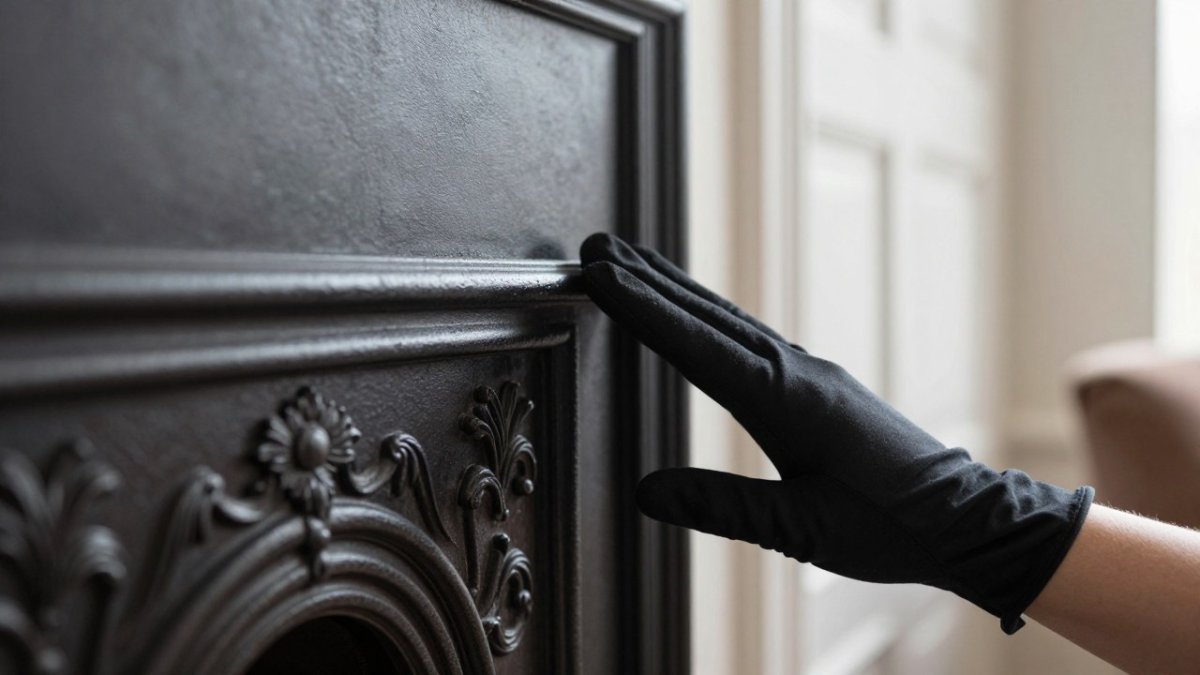
Cast iron fireplaces usually come in one of three finishes, and each one reacts differently to water, brushes and cleaners.
Matt-black paint, bare iron or polished surface
Matt-black paint is the most common finish on period inserts.
Bare iron has no coating. It rusts fast once damp, so dry methods matter more than wet ones.
Polished surfaces show every smear. They need gentle wiping and a proper polish to bring back the shine.
A quick test helps: rub a hidden spot with a white cloth.
How to Remove Soot From Cast Iron in 7 Steps
Removing soot from cast iron takes about 30 to 45 minutes once the fireplace is cool. The method below suits painted and bare iron inserts. Work slowly, keep water minimal and dry everything as you go.
Step 1: Let the fireplace cool completely
Wait at least 24 hours after the last fire. Warm cast iron grabs moisture and warps under cold water. Cool iron also stops ash from turning into a paste.
Step 2: Sweep out ash and loose soot
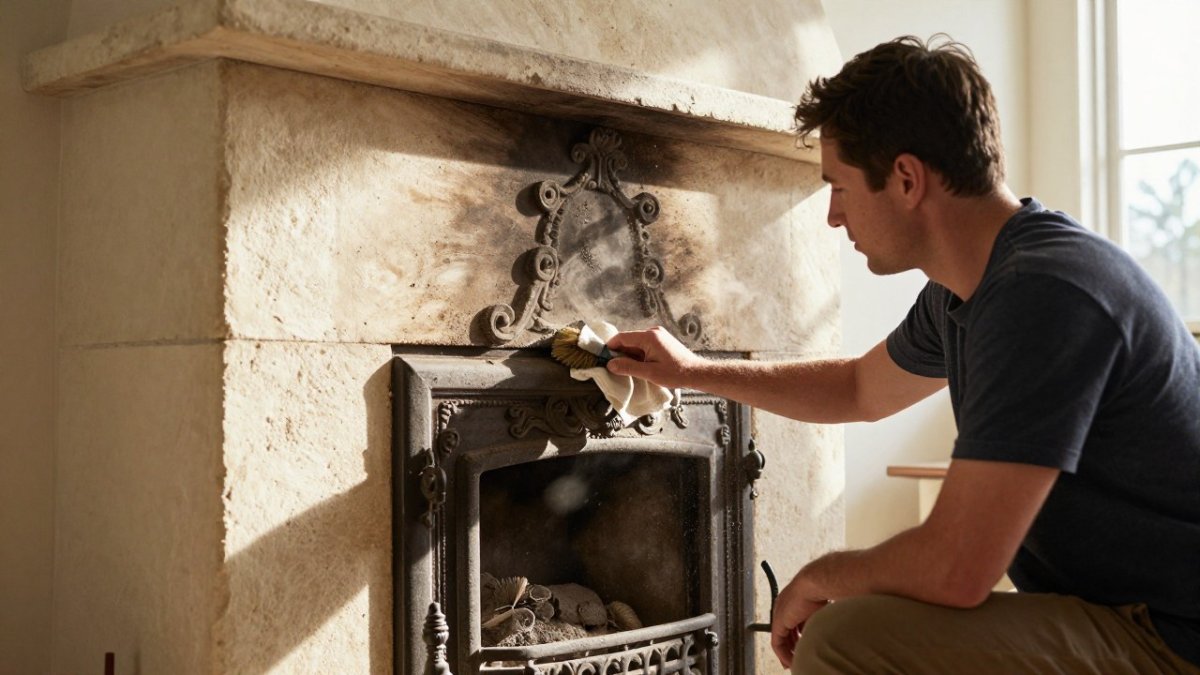
Lay newspaper or a drop sheet around the hearth. Use a small brush and dustpan to sweep ash from the firebox, then brush loose soot from the back and sides, working top down so debris falls onto the base.
Step 3: Dry wipe the surface
Run a dry microfibre cloth over the whole surround. This lifts loose dust before it turns into muddy streaks. Change cloths when they turn grey.
Step 4: Wash with mild soap and warm water
Mix a small amount of dish soap into warm water. Dampen a soft cloth, wring it out well, then wipe in gentle circular motions. Never pour water onto the iron.
Step 5: Lift stubborn soot and grime
For stubborn marks, use a soft brush with a little soapy water and light pressure. Greasy soot responds to a dedicated cast iron cleaner. Test any product on a hidden spot first.
Step 6: Dry thoroughly to stop rust
Buff the surface dry with a clean cloth straight away. Leave the firebox door open for a few hours so air reaches the back and sides. Any damp patch will rust within days.
Step 7: Polish and protect the finish
Apply a thin coat of cast iron polish or a suitable protective coating. Work it in with a soft cloth, then buff off the excess. This seals the surface and makes the next clean easier.
| Step | Task | Time | Key Tool |
|---|---|---|---|
| 1 | Cool completely | 24 hrs | None |
| 2 | Sweep ash and soot | 10 min | Brush and dustpan |
| 3 | Dry wipe | 5 min | Microfibre cloth |
| 4 | Mild soap wash | 10 min | Soft cloth, warm water |
| 5 | Lift stubborn soot | 10 min | Soft brush, cleaner |
| 6 | Dry thoroughly | 2-4 hrs | Dry cloth |
| 7 | Polish and protect | 10 min | Cast iron polish |
Brushes, Cloths and Cleaners That Are Safe to Use
Safe cleaning comes down to soft tools and mild products. Stiff wire brushes and harsh chemicals strip paint and scratch polished iron.
Use these:
- Soft brush or paintbrush for loose soot
- Microfibre cloths for wiping and drying
- A small dustpan for ash
Avoid these:
- Steel wool and wire brushes
- Bleach and abrasive powders
- Vinegar on bare iron, which speeds up rust
Tackling Stubborn Soot, Greasy Grime and Marks
Stubborn soot is not one problem.
Dry, powdery soot sits on the surface and lifts with a soft brush and a dry microfibre cloth. If a mark brushes away to a grey haze but does not disappear, it is dry soot pressed into the pores.
Greasy, tacky soot is the dark film that smears when you touch it, formed when soot binds with tar and moisture from slow-burning or damp fuel.
Baked-on soot is the hard, glossy black patch that has been through several fires. Because baked-on soot responds better to dwell time than force, keeping the surrounding area protected while the cleaner works is part of preventing soot mess.
A soot-specific escalation method
Work through these stages in order and stop as soon as the mark lifts. Escalating too fast is how finishes get damaged.
- Dry brush. Use a soft brush in short strokes, working from the top of the mark downwards so loosened soot falls away rather than back into the surface.
- Damp cloth with mild soap. Wring the cloth until barely damp. Wipe in one direction, then turn to a clean face rather than wiping back over the same spot.
- Soap paste with dwell time. Mix dish soap with a little water to a paste, apply, and leave for three to five minutes. Scrub gently in circles, then rinse with a damp cloth and dry at once.
- Dedicated cast iron soot cleaner. Choose one formulated for cast iron and follow the label's dwell time. Test on a hidden spot first, especially on painted surfaces.
- Soft abrasive pad, painted or bare iron only. Use light pressure and keep the pad wet with soapy water. Never use this on polished iron.
Watch out: scrubbing a dry mark too hard grinds soot into the paint and leaves a permanent grey patch that no cleaner will lift.
Matching the method to the finish
- Matt-black paint: stop at stage 3. Solvents and abrasive pads cut through the paint film and leave a patchy sheen that shows under light.
- Bare iron: stages 1 to 4 are safe, but dry the surface immediately after any wet stage. Bare iron flash-rusts within hours of damp contact.
- Polished iron: stay with stages 1 and 2, then finish with a metal polish. Any grit trapped in a cloth will leave fine scratches in the polished face.
When the mark is not soot
A mark that will not lift after stage 4 may not be soot at all. Brown discoloration is usually rust bleeding through, and a patch duller or shinier than the surrounding surface is damaged paint or polish, not deposit. Cleaning will not fix either; they need treatment or refinishing, covered in the restoration section below. Knowing when to stop cleaning and start restoring saves a finish that is otherwise sound.
Which Cast Iron Fireplace Polish to Use
The right cast iron fireplace polish depends on the finish.
Look for these qualities:
- Suits your finish type
- Heat-resistant once cured
- Free from harsh abrasives
Apply polish sparingly. A thin coat protects better than a thick one, which traps dust and smears. Reapply every few months, or whenever the surface looks dull.
If you're unsure which polish suits your fireplace, our experts can help you choose the right product for your finish.
How to Restore a Cast Iron Fireplace That Has Rusted
Rust means moisture has reached bare iron.
Light rust: wipe with a cloth and polish, then seal with a protective coating.
Heavy rust or pitting: the piece likely needs full restoration. That means stripping old paint, treating the iron and refinishing the surface.
For a beginner-friendly walkthrough, see our guide on how to restore a cast iron fireplace as a beginner.
Safety, Ash Disposal and Keeping It Clean
Soot and ash are fine, light and easy to breathe in, and they travel further through a room than most people expect. A few precautions keep the job contained and protect both you and the room.
Before you begin
- Confirm the ash is cold. Ash can hold heat for days inside a deep bed. Wait at least 48 hours after the last fire, then check by holding your hand a short distance above the ash. If you feel warmth, wait longer.
- Protect the room. Lay a drop sheet over the hearth and extend it at least a metre in front of the fireplace; soot dust settles on soft furnishings and is hard to remove.
- Seal the room if you can. Closing the door and opening a window keeps airborne soot from spreading through the house.
Managing soot dust while you work
Dust is the main hazard here, and it is easy to make it worse. Never use a household vacuum on cold ash unless it is rated for fine dust; ordinary filters pass soot straight back into the air. Dampen a cloth slightly before wiping so soot clings to it rather than becoming airborne. Fold dirty cloths inward and bag them rather than shaking them out.
Disposing of ash and soot safely
- Let ash cool for at least 48 hours before bagging it.
- Use a metal container with a lid, and keep it away from anything flammable, including walls and timber floors.
- Never tip ash straight into a plastic bin, and never put it out with household rubbish while there is any chance of warmth remaining.
Routine care that prevents soot build-up
Regular care is what stops soot becoming a restoration job. A dry wipe of the surround each week plus a polish every few months keeps the surface sealed so soot sits on top rather than working into the iron.
For ongoing care advice on period fixtures, our article on how period architectural fixtures are maintained covers the wider routine.
Choosing the Right Care Products for Your Fireplace
Choosing care products comes down to matching the product to the finish. Buy for the surface you have, not the look you want.
- Matt-black painted insert: blackening polish, soft brushes, mild soap
- Bare iron: protective coating, dry cloths, rust treatment
- Polished iron: metal polish, microfibre cloths, gentle cleaner
Keep a small kit together: a soft brush, two microfibre cloths, mild soap, your polish and gloves. A dedicated kit makes regular cleaning quick and stops you reaching for the wrong product in a hurry.
Restoration Station offers many cast iron fireplaces and architectural hardware, with expert advice for restoration and renovation projects.
Cleaning soot from a period fireplace takes care, but the right tools and a finish-aware method keep the iron protected for decades.
Frequently Asked Questions
Can you use water to clean a cast iron fireplace?
Yes, a small amount of warm water with mild dish soap is safe for most painted or enamelled cast iron surrounds. Wipe with a damp microfibre cloth and dry immediately. Never soak the iron or leave water sitting in joints, and avoid water on bare or polished iron, where it causes flash rust within hours. Dry thoroughly with a soft cloth after any wet wipe.
How do you remove stubborn soot from cast iron?
Start with a dry soft brush to lift loose debris, then apply a paste of bicarbonate of soda and a little warm water to the stubborn marks. Work in circular motions with a soft cloth, leave for a few minutes, and wipe away. For greasy soot on a painted surround, a small amount of mild degreaser on a cloth works; rinse and dry straight away to protect the finish.
Should you polish cast iron after cleaning soot?
Polishing protects the surface and restores a matt-black finish after cleaning. Use a cast iron fireplace polish or a thin coat of high-temperature paint on painted surrounds, applying in circular motions and buffing off the excess. Avoid polish on bare iron that will be repainted, and never use oil-based products on surfaces that will get hot before the coating has fully cured.
How often should a cast iron fireplace be cleaned?
Clean out ash and loose soot after every few fires, and give the surround a dry wipe weekly during heavy use. A full wash and polish every one to three months keeps the finish in good order. In winter, check for rust spots monthly, especially around the back and sides where moisture collects, and touch up any bare patches before they spread.